Journal
Extension Architecture: What Architects Deliver and What Architects Need From You
Extension Architecture: What Architects Deliver and What Architects Need From You
Table of contents
Extension, Explained Without Jargon
What Your Property Type Changes
How Architects Handle London Constraints
Side Extension Choices for Terraces and Semis
House Extension Realities in Conservation Areas
Extension Services That Keep the Job Moving
Small Extension Wins That Clients Actually Feel
Single-Storey Extension Layouts That Suit Family Life
Frequently Asked Questions
Extension, Explained Without Jargon
Most clients come to us because the place they love no longer fits day to day, and London sites rarely forgive messy decisions.
In plain terms, extension architecture is the work of enlarging an existing home so the new space looks right, functions properly, and can actually be delivered on site. Done well, it improves layout and light without feeling forced.
From an operations angle, I keep it simple:
what you want to achieve,
what the site will allow,
how we build it without chaos.
That mindset keeps a project steady, especially when access is through a narrow front door and the skip sits on a residents’ bay. In RBKC, a parking suspension is often the difference between smooth days and chaos.
What Your Property Type Changes
The same idea lands differently on a detached plot near Richmond Park versus a mews in South Kensington or a flat off Marylebone High Street.
Here are the residential structure types we regularly run into, and the practical knock-ons for extension architecture.
Residential structure type (common labels) | Typical constraints we plan around |
Detached, semi-detached | Boundary conditions, daylight to the neighbour, and roof geometry for a loft |
Townhouse, stacked townhouse, duplex, triplex, fourplex | Party wall coordination, leases, and shared service routes |
Low-rise apartment, mid-rise apartment, high-rise apartment, condominium | Freeholder approvals, fire strategy, and logistics in shared areas |
Split-level, bungalow | Levels, headroom, and keeping the new spaces feeling natural |
Additional Residential Unit (ARU), mobile home | Site limits, utilities, and what the council will accept |
In a conservation area, the street story matters, so we keep proposals calm and well evidenced.
How Architects Handle London Constraints
Good architects spend time on the boring stuff early, because it is rarely boring once you are on site. Our architects start by confirming what you want the space to do, then we test options against planning, structure, and programme.
This is where extension architecture earns its keep. If circulation and levels work on paper, your builder can price properly and the process is smoother.
We do a lot of work in areas where scrutiny is normal: Westminster, Kensington and Chelsea, Camden, and Islington. From our Fitzrovia base on Newman Street, we’re constantly balancing what clients want with what a tight London plot will tolerate.
How Planning Decisions Are Really Made
In boroughs like Westminster and RBKC, clarity wins: simple drawings, honest constraints, and a calm proposal.
Neighbours, Access, and Site Discipline
On tight streets, good manners and a tidy site plan often prevent bigger problems later.
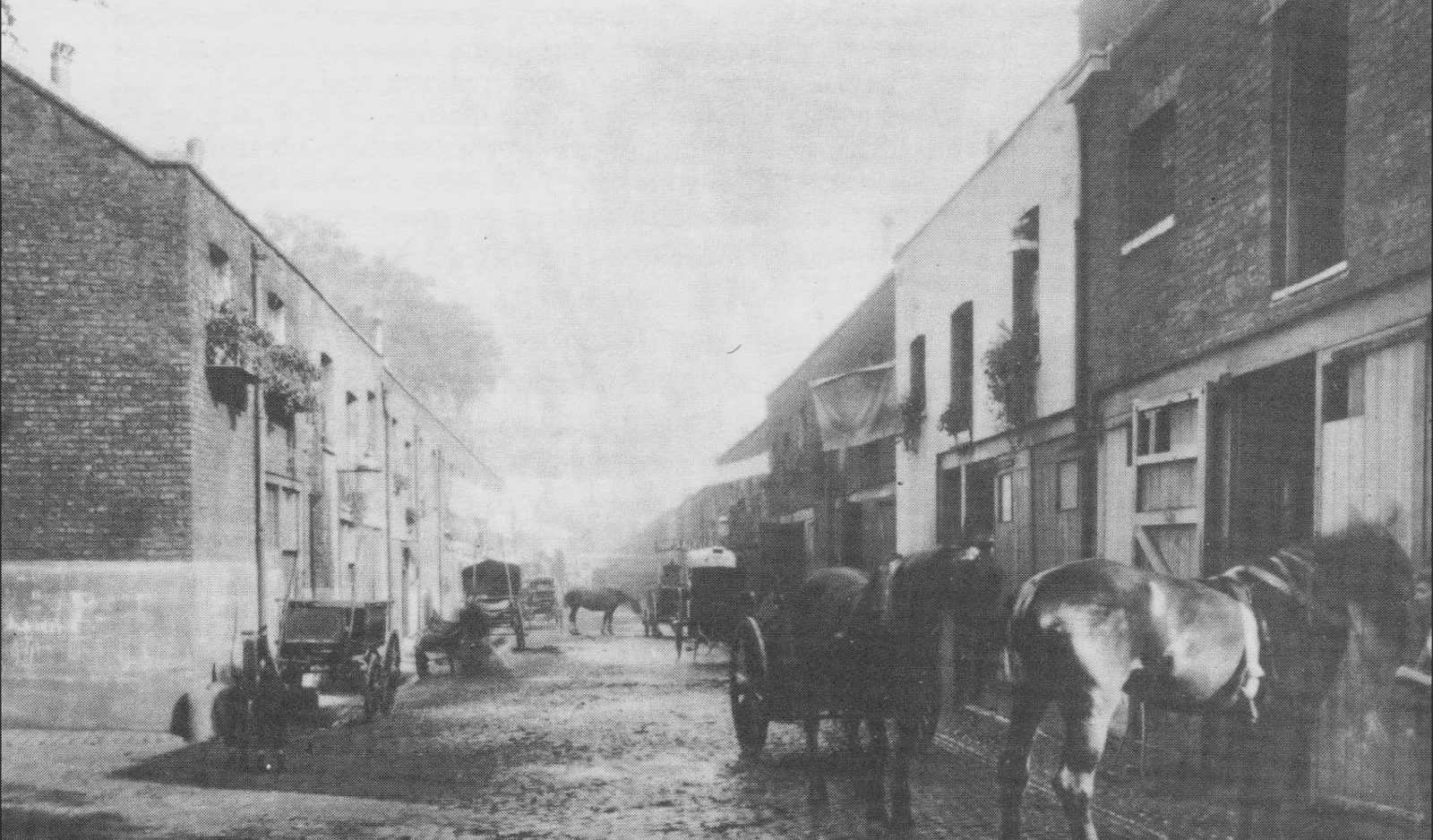
If you want a feel for our approach, browse our Portfolio and the Ensor Mews project.
Side Extension Choices for Terraces and Semis
A side extension can unlock value, but it needs discipline. You are close to a boundary and close to a neighbour’s windows, so massing, glazing, and drainage have to be considered together.
Operationally, access is the big one. If trades can only enter through the existing hallway, you need a plan to protect floors and keep the site safe.
House Extension Realities in Conservation Areas
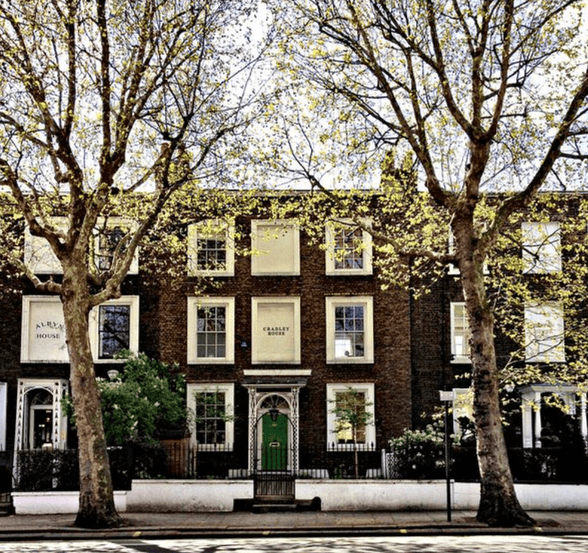
On many streets, the planning conversation is not “can you extend”, it is “how should it look and how will it sit with the neighbours”. That is where the word architecture really matters, proportion, materials, and the way a rear elevation is read from multiple gardens.
On a house extension in a conservation area, we also think about listed building consent, party wall process, and how noise is managed for neighbours.
A storey extension can be the right move in some locations, but you need to be realistic about rooflines, visibility, and precedent. Where it is appropriate, storey extensions should feel composed, not bolted on.
We also look at the roof early. If you are thinking about a loft, it should be part of the first layout, even if you do not build the loft straight away. A single decision on stair position can save months of disruption later.
Extension Services That Keep the Job Moving
When people picture design, they often think about the concept drawings. In reality, the work is coordination and follow-through. Our extension services cover planning, detailed design, and the technical information a contractor needs to build confidently.
This is where extension architecture meets real life. It is about getting information out on time, answering site queries quickly, and keeping decisions aligned so the project does not drift.
It also helps when your interior designers are involved early. Joinery, lighting, and storage decisions are much easier when the layout has been resolved properly. You can see how we structure our services on our Services page.
Small Extension Wins That Clients Actually Feel
A small extension can transform a kitchen and family space, especially in a typical London terrace. I’ve seen home extensions succeed because the changes were modest but very well thought through.
A practical tip: decide early what you want to see when you stand at the back door, then design the opening around that view, and add storage where it saves daily friction.
If you are changing glazing, be specific. A window extension sounds minor, but head heights, shading, and privacy can make it either brilliant or annoying.
Single-Storey Extension Layouts That Suit Family Life
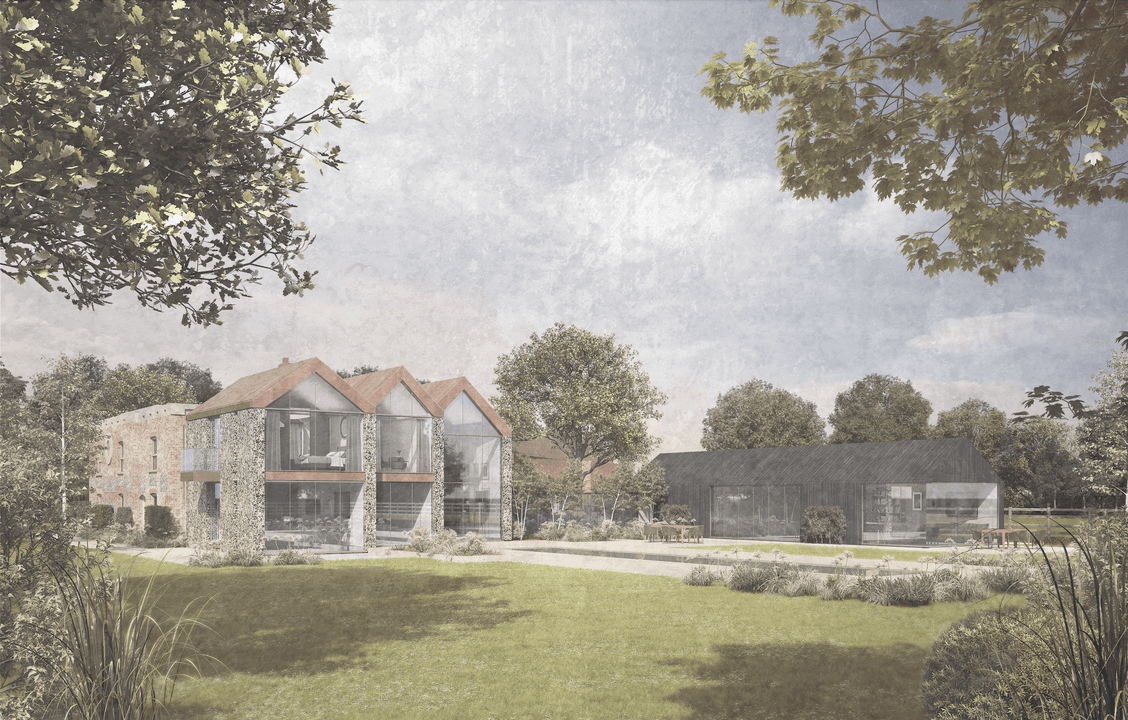
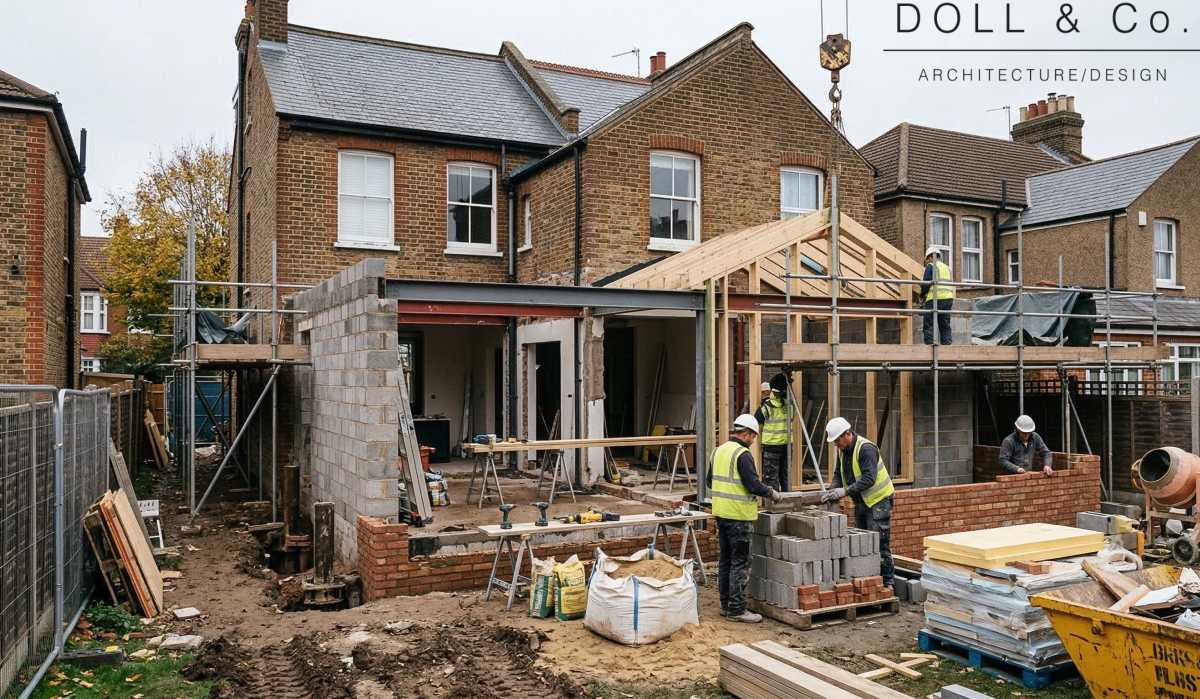
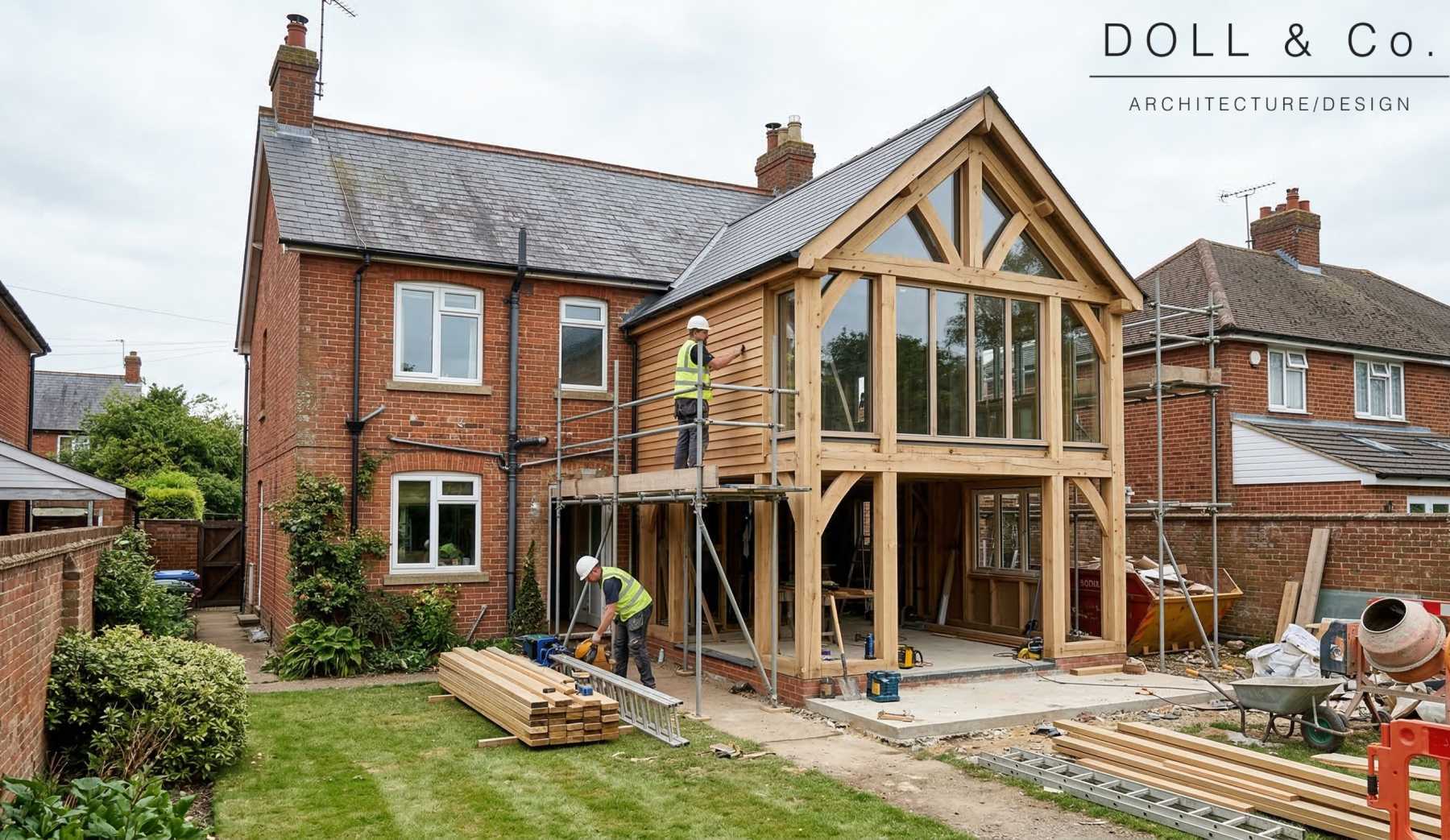
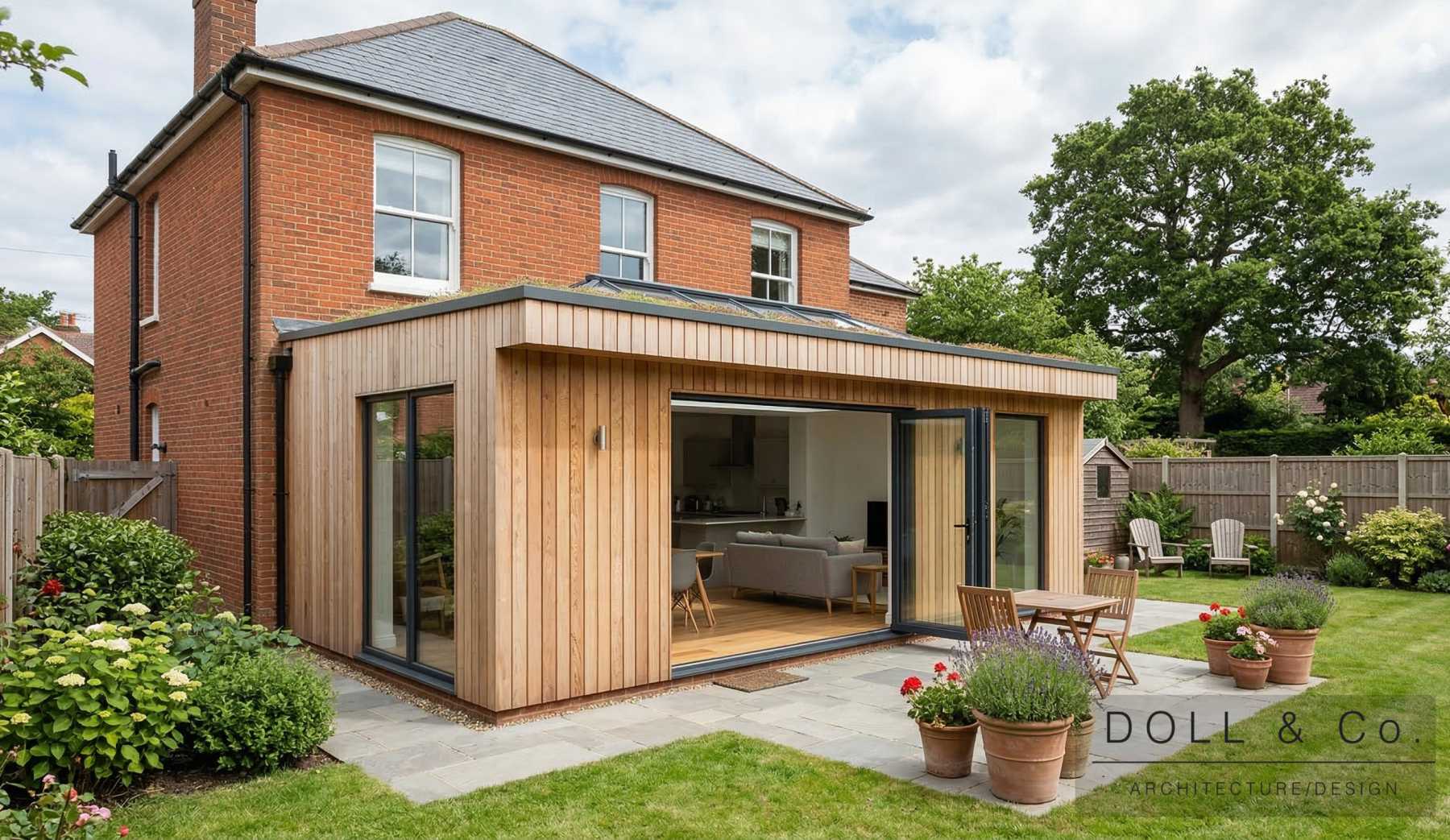
A single-storey extension is popular because it can change the ground floor without turning the whole place upside down. At its best, extension architecture makes the garden feel closer, even on a grey London afternoon. In practical terms, you are usually working at the rear, and that means we pay close attention to roof form, drainage falls, and how the threshold meets the garden level.
If you also want a loft, we coordinate the structure so you are not paying twice. It is common to combine rear work with a roof package as a single programme, rather than two separate hits.
A Timeline That Feels Realistic
We flag long-lead items early, like glazing, kitchens, and steelwork, so you are not waiting with a half-open back wall.
If you want to see an example of careful rear enlargement, take a look at our Chelsea SW3 project. It shows how a bigger footprint can still feel settled.
Extension architects earn their keep when they can balance planning, structure, and the day-to-day reality of living through the works.
Frequently Asked Questions
Is it worth getting an architect for an extension?
Yes, if the work affects structure, neighbours, or planning. The fee is usually repaid in clarity and fewer surprises.
How much is an architect for an extension?
It depends on scope and how involved you want the team to be, from planning drawings through to site support.
What is an extension in architecture?
It is an enlargement to an existing property, designed so old and new work as one, visually and practically.
What is the average cost of an extension in the UK?
It varies by access, finishes, complexity, and local rates. In central London, logistics alone can shift costs, so cost planning is part of the early project work.
If you are ready to talk it through, the quickest route is ourContact page. For more context on how we work in London and beyond, you can also browse theJournal.
Author

Ian Dollamore
DOLL & Co.
Ian is a leading architect and designer with extensive experience across the luxury real estate sector.
Date
Share article