Journal
Modern Extension for Home Extensions
Modern Extension for Home Extensions
Table of Contents
Home Extensions That Feel Built-in, Not Bolted-on
House Extensions Across London Property Types
Planning the Extension Like a Working Household
Surveys and the “unknowns” That Affect Programme
Permissions, Neighbours, and the Paperwork That Slows People Down
The Role of Design in Keeping the Build Straightforward
Materials and the View From the Street
House Extension Layout, Light, and Storage
Small Extension Choices That Make a Big Difference
Modular Extension, Panelised Routes, and What Makes Them Work
Rear Work, Structure, and the Realities of Building
Programme, Noise, and Running a Tidy Site
Budget Reality Checks
Frequently Asked Questions
Home Extensions That Feel Built-in, Not Bolted-on
When someone asks me for a modern extension, they are usually trying to solve two problems at once: the layout is cramped, and the back of the property doesn’t work for everyday life.
I manage the delivery side, so I’m paid to be boring about the important things: access, deliveries, waste, and the point where the rear wall gets opened up. London jobs live or die on these details, especially in tight streets with parking controls, resident-only bays, and neighbours working from their dining tables.
A lot of clients arrive with screenshots and a handful of “clean look” references. That’s fine, but it’s only half the story. The other half is whether the new room will feel like it has always belonged, and whether the build can be delivered without months of chaos.
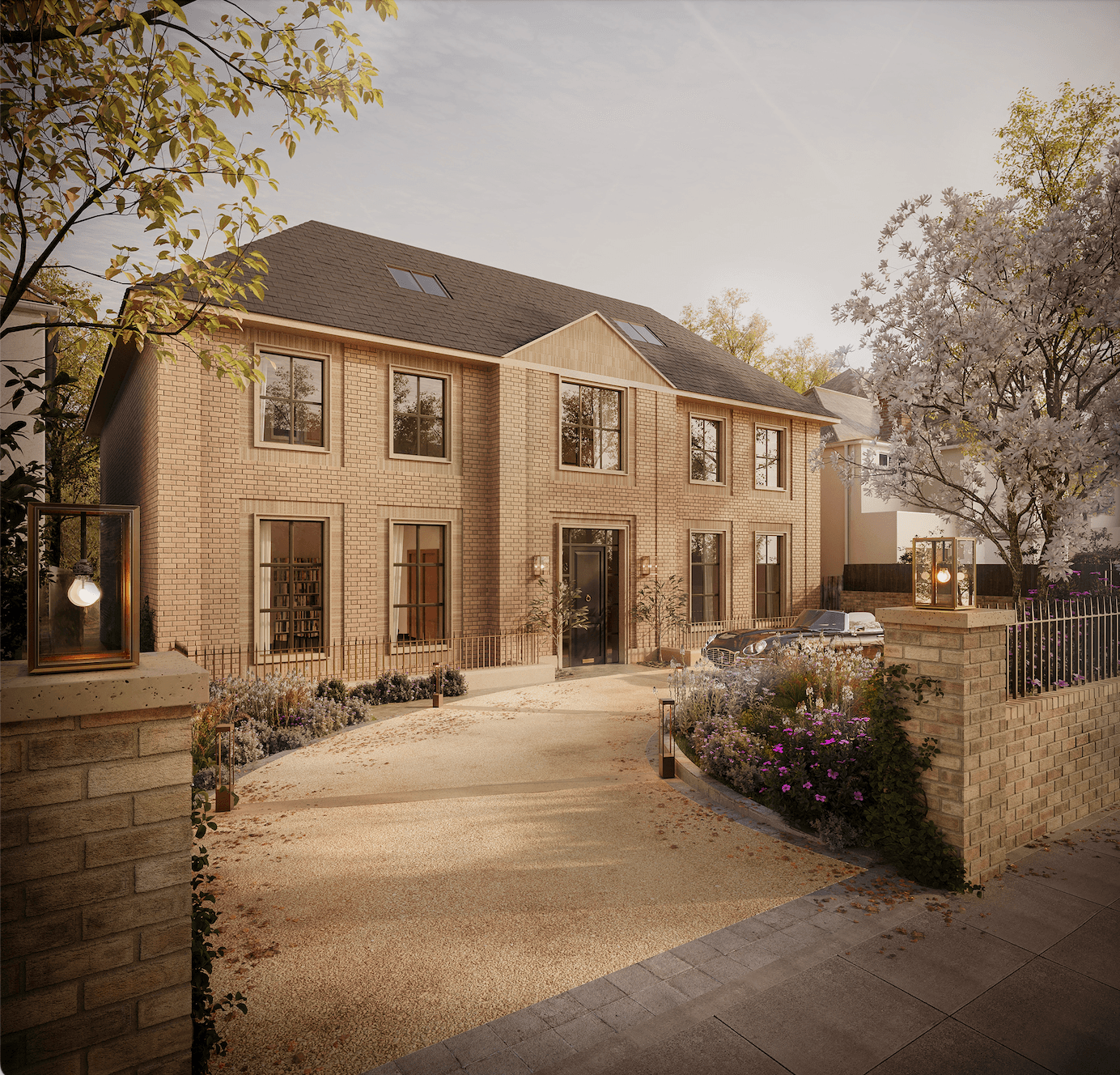
In practice, most home extensions succeed when we keep the brief steady and the detailing disciplined. Done properly, modern extensions can sit quietly against older fabric, and still feel generous the minute you step inside.
If you’re early in the process, start with how you want to use the extra space. Be specific. A proper family dining set-up, a calmer route to the garden, a studio corner for drawing, or storage that takes pressure off the hallway. Clear outcomes stop the brief drifting later.
Two quick truths from jobs we run around Fitzrovia, Marylebone, Kensington and South Kensington:
1) Permissions take longer than you want.
2) On-site logistics matter as much as drawings.
House Extensions Across London Property Types
In London we see every sort of home: Victorian terraces, Edwardian semis, Georgian townhouses, mews properties tucked behind main roads, period conversions, purpose-built flats, maisonettes, loft apartments and warehouse conversions. We also get the odd outlier, from ex-council properties to a luxury penthouse where the rules are set by the management company.
The buildability and the permission route vary between these. Here are the patterns I see most often:
Property type (typical) | What usually controls the scheme | What we do early |
Terrace or end-of-terrace | Party walls, daylight, neighbour privacy | Agree massing, levels, and openings before the application |
Mews property | Access, servicing, and street management | Map deliveries, waste routes, and scaffold positions |
Period conversion / mansion flat | Freeholder approvals, shared services | Confirm permissions and service routes before drawings are “final” |
Semi-detached | Side boundaries, overlooking, roof lines | Set out footprint and window positions with care |
Detached | Larger scope, but bigger expectations | Lock the brief, then phase works to keep it controlled |
This is also where we decide whether the works should be one hit or phased. If a loft is on your long-term plan, we can set the logic now, even if you don’t build it this year. It keeps decisions consistent and avoids re-opening ceilings later.
Planning the Extension Like a Working Household
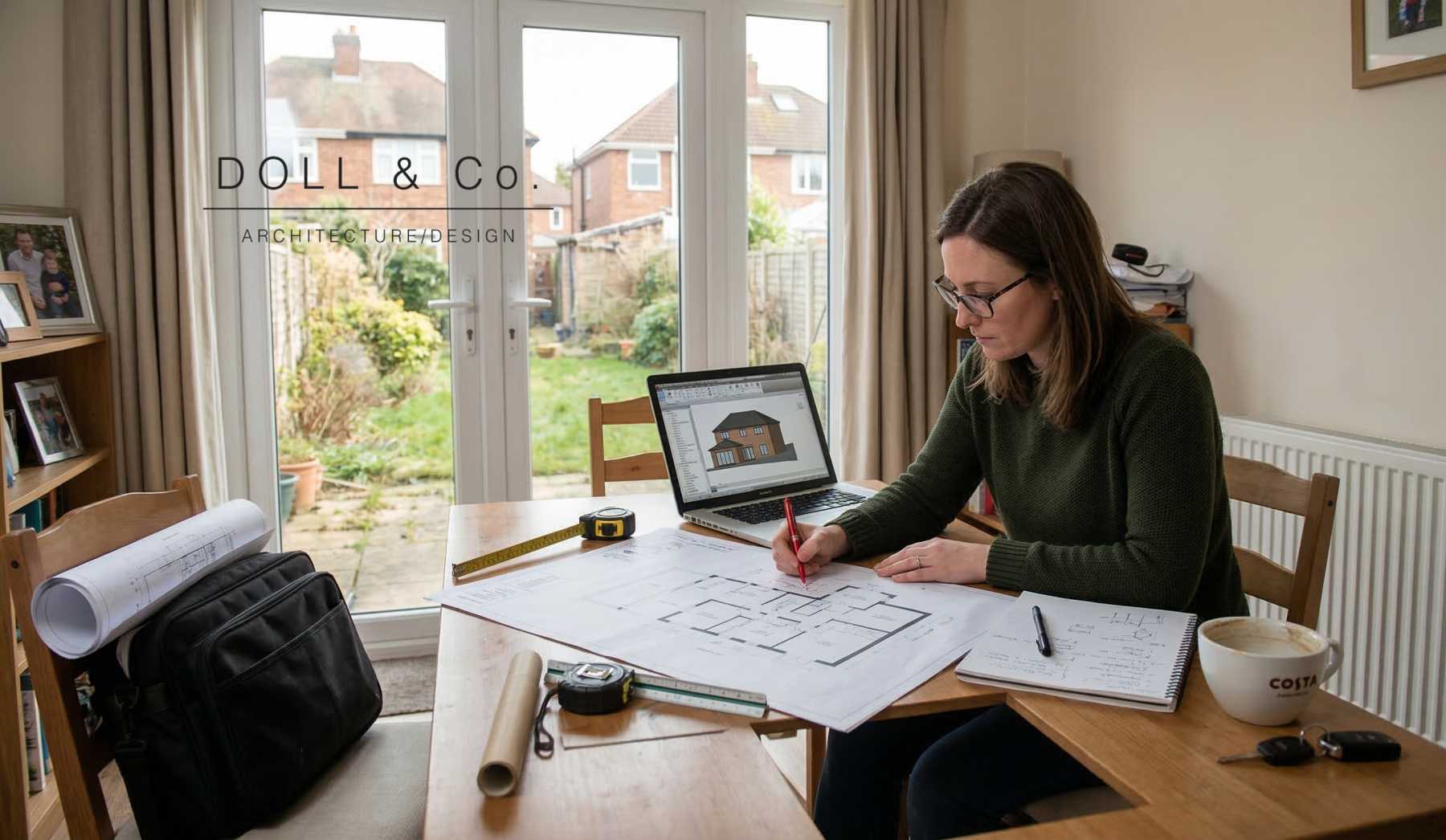
A good brief does not need to be complicated, but it does need to be consistent. I ask clients to pin down three things in plain English: what happens in the new room on a normal weekday, what the route through the property should feel like, and what absolutely cannot move (stairs, key windows, or a bedroom arrangement).
That’s the point where we move from wishes to decisions. We test layout options against structure, drainage falls and the existing walls, then we fix openings and levels so pricing is honest.
It sounds obvious, but it is where many projects wobble. People keep options open for too long, then wonder why the programme slips. On site, late decisions don’t feel flexible. They feel like delays and unplanned cost.
Surveys and the “unknowns” That Affect Programme
Before we commit to dates, we look for the things that commonly bite: uneven floors, hidden steel, awkward drainage runs, and historic alterations that never made it onto drawings.
A second step is checking services before anyone gets excited about finishes. We like to know where incoming water and gas sit, whether the existing drainage has capacity, and whether there are awkward runs that force pumps or raised floors. None of that is glamorous, but it is exactly the sort of detail that changes a programme.
If access is tight, we also think about storage. Where do materials sit between delivery and installation? If the answer is “on the pavement”, you’ll get complaints and you’ll lose time. A small amount of planning here saves a lot of friction later.
Finally, agree working hours and comms early. A short, regular update to neighbours, even if nothing has changed, is better than silence. It reduces assumptions, and it gives you a route to solve problems before they turn into formal complaints.
If you’re in a period property, the back half can be a patchwork of changes. That is not a problem, but it does mean we plan with a bit of humility. We would rather confirm what is there than assume.
This is also where we think about where the work can start. Sometimes you can strip out internally while you wait for approvals. Sometimes you can’t. The right call depends on risk and neighbour sensitivity.
And yes, this is where party wall conversations start if you share structure. Getting those discussions going early keeps the project calm. Leaving them late is one of the fastest ways to blow a programme.
Permissions, Neighbours, and the Paperwork That Slows People Down
Approvals can take longer than the physical works, particularly in conservation areas or for listed buildings. Even when a proposal is sensible, it still needs a clear narrative and good drawings to move through the system.
From a manager’s point of view, the risk is not the form-filling. It is the knock-on effect. If permissions slip, the contractor slot slips. If the slot slips, the lead times shift. Then you’re paying for temporary protection longer than you planned.
We also factor in neighbour realities. In places like Marylebone, Kensington and South Kensington, we think about where skips can sit, how deliveries are scheduled, and whether access is shared. We have seen too many jobs where the paperwork was “fine”, but the site plan was not.
A practical note: getting your neighbours on side is not about charm, it is about information. A simple letter, a sensible working-hours plan, and a named person to speak to makes life easier for everyone.
The Role of Design in Keeping the Build Straightforward
At DOLL & Co we treat early decisions as the cheapest decisions. That includes junctions, lighting intent, and how the room will be furnished.
This is where extension architecture earns its keep. It’s not just the look, it’s how the room is put together, how it will be serviced, and how it will be maintained. When that is resolved on paper, the site team can focus on building well, not firefighting.
Materials and the View From the Street
Clients often ask for a “simple” rear elevation. Simple is good, but it isn’t automatic. It comes from proportion, tidy junctions, and a disciplined approach to external clutter like vents and downpipes.
If you are in a conservation area, boroughs like Westminster, RBKC, Camden and Islington will look carefully at how a rear change reads in context. We handle this with clear drawings and a measured story, so you’re not redesigning halfway through.
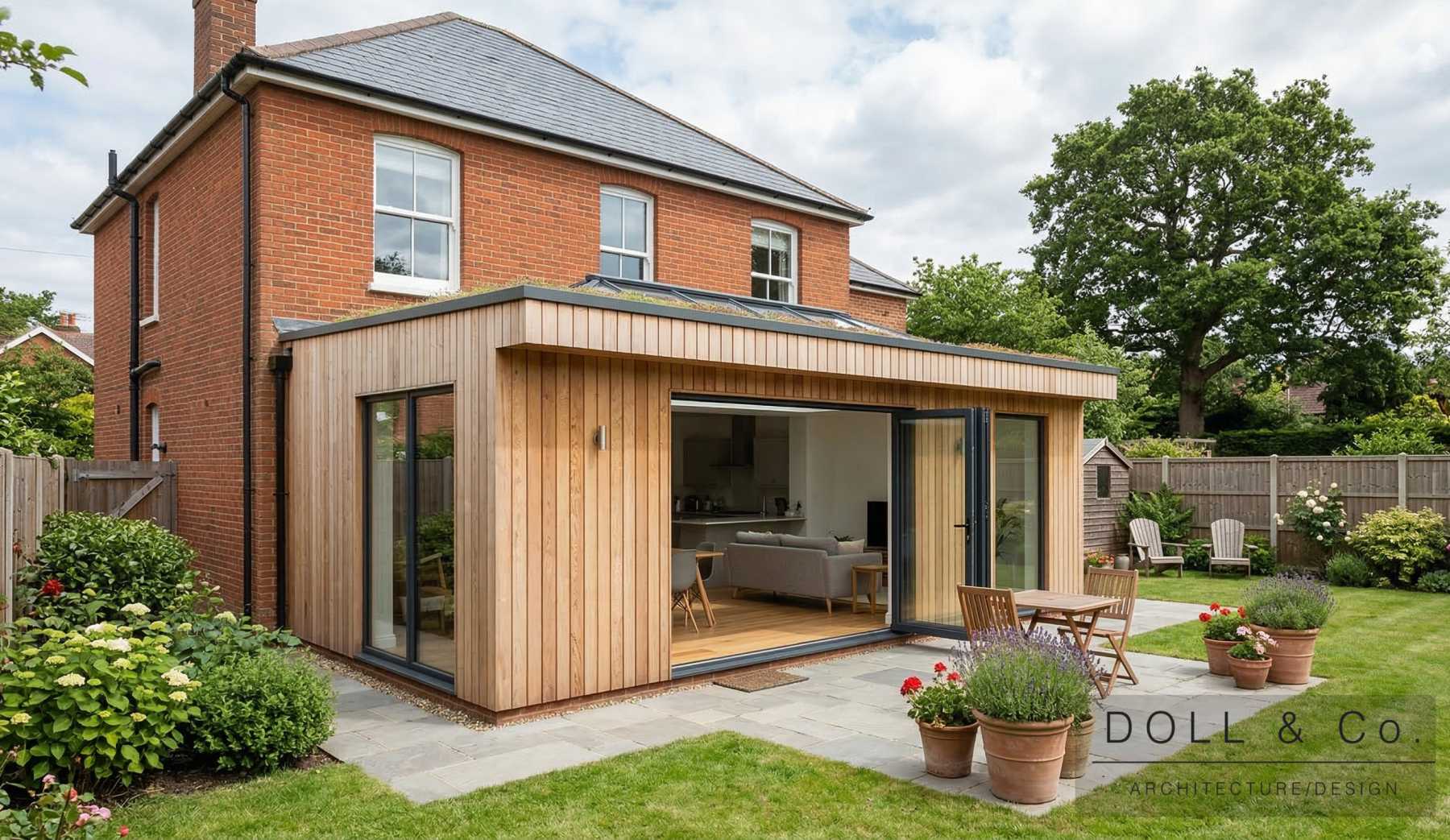
A lot of the contemporary look people like comes from consistent lines. If you want timber or metal finishes, think about maintenance and patina, not just day-one photos. We often see rear volumes clad in zinc or timber, but the right answer depends on context, not fashion.
Glazing is another point where people get carried away. One large opening can be brilliant, but a set of smaller openings can give you better wall space and more flexibility with furniture. It also helps with overheating, glare and privacy.
This is also where we talk about comfort and performance. Ventilation routes, shading, and how the room behaves in summer are not afterthoughts. A good room should feel settled year-round, not just in spring.
House Extension Layout, Light, and Storage
Most clients are drawn to the big opening at the back. I get it. But day-to-day comfort comes from smaller decisions: where coats go, where recycling lives, and whether you can move through the room without dodging chairs.
If you are planning a kitchen extension, sort ventilation routes early and think about how the main worktop faces the room. A calm layout is a practical one.
We also check thresholds and external levels early. This is where internal floors meet paving, and it is where damp and drainage mistakes show up. Get it right and you step out cleanly to the garden. Get it wrong and you’ll be chasing water marks and cold spots.
One tip from the jobs we run in tight central streets: don’t assume you can “fix it later” with finishes. Once services are in and levels are set, later fixes are expensive.
Small Extension Choices That Make a Big Difference
A small extension can change daily life more than people expect, particularly in terraces where rear rooms are chopped up and the middle of the plan is gloomy.
The trick is to avoid “extra room” that doesn’t work. I would rather see a slightly smaller footprint that is properly designed than an awkward shape that creates dead corners.
If you want extension ideas that stay practical, focus on storage built into the plan, a dining spot that doesn’t block circulation, and lighting that works for normal evenings, not just photos. That is where the value sits.
A little nuance: sometimes the best result comes from reducing clutter rather than pushing the footprint. Reorganising a stair, adding joinery, or adjusting door swings can make the entire rear read as one usable zone. That kind of work is less glamorous, but clients notice it every single day.
Modular Extension, Panelised Routes, and What Makes Them Work
People often ask about speed and disruption. A modular extension can help, but only when the conditions are right.
Off-site fabrication suits simple geometry and good access. If the street is tight and crane time is limited, the “fast” route can become the stressful route. The best results come when we can plan deliveries properly, keep the installation window short, and protect neighbours from weeks of disruption.
It is also worth thinking about future adaptability. If you’re reorganising electrics, heating and drainage, do it in a way that can be maintained without ripping walls apart. That is boring advice, but it saves real money.
A typical home extension benefits from a clear maintenance plan too. Who will clean the gutters? Where can you safely access glazing? Can the external finish be repaired without specialist scaffolding every time?
If you are considering this route, we are quite direct about what it needs: site access that suits bigger elements, a clear temporary storage plan, and a contractor who is comfortable coordinating set pieces. Without those, the promised speed rarely shows up.
Rear Work, Structure, and the Realities of Building
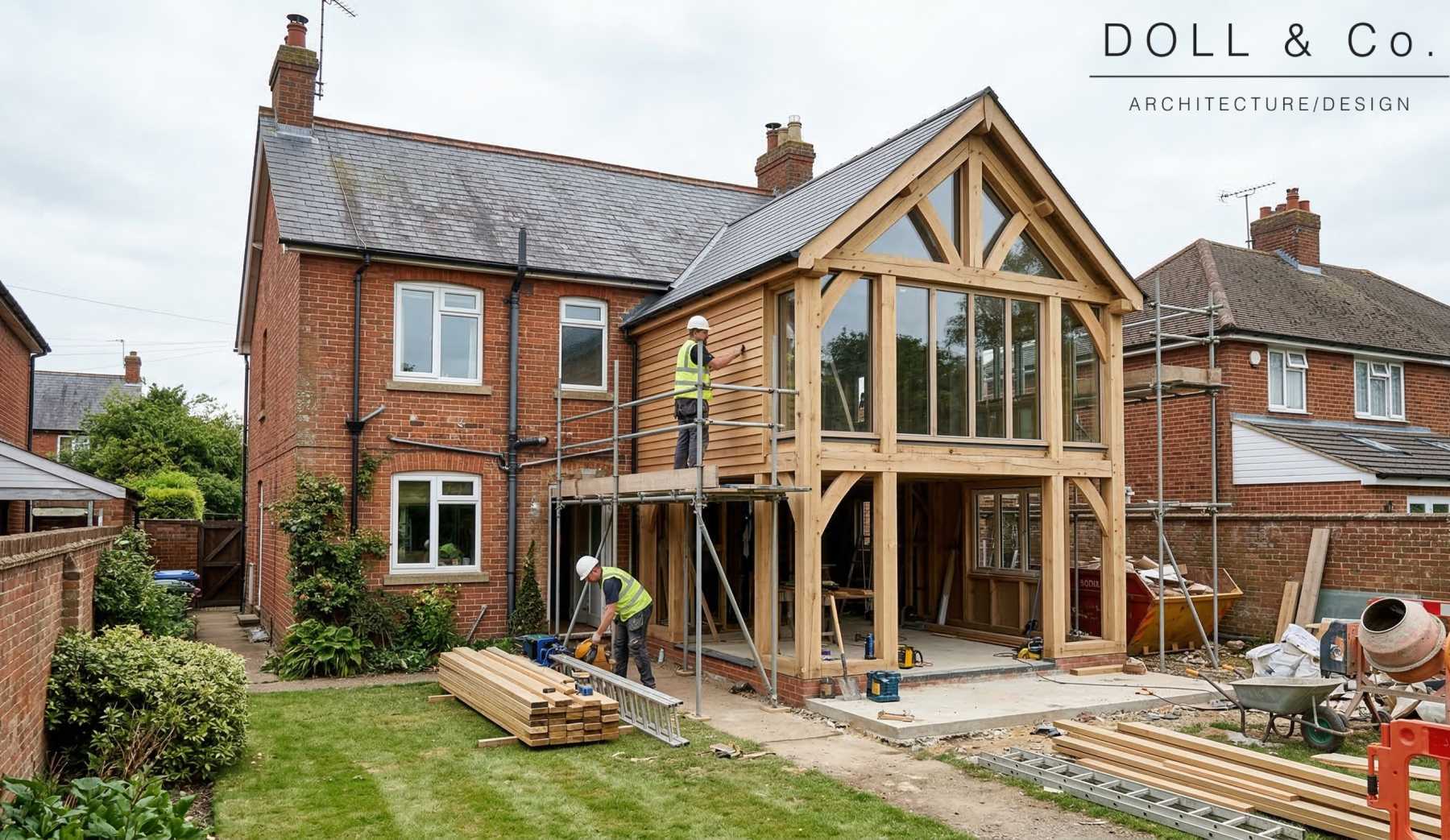
A rear extension is usually the moment a household feels the disruption. There is a noisy phase, a dusty phase, and a period where weather protection matters.
We plan the structural strategy early, including steel positions and temporary works, so the contractor can move quickly once the opening begins. If that is left late, the programme stretches and costs rise.
Some clients stay in the property with a temporary set-up. Others decant for a short period. Both can work, but you need to plan it so the home remains safe and you have a clear route through the site. If there are children, pets, or a narrow hallway, the plan needs to be explicit.
There’s also a big difference between a room that looks good and a room that lasts. This is where we push for proper specification and clear responsibility on site. If nobody “owns” a junction detail, it will be guessed, and guessed details are the ones that fail.
A note on sequencing: it is almost always cheaper to coordinate openings, thresholds and drainage properly than to “make good” later. Fixing a fall, redoing paving, or reworking a waterproofing detail costs more than doing it right the first time.
Programme, Noise, and Running a Tidy Site
From my side, a tidy job is a calmer job. It is also safer, and it protects your neighbours.
On tight London sites, we plan four basics and stick to them:
Where deliveries stop and how materials are carried through
Where waste goes, and how often it is removed
How the work area is secured at the end of each day
How neighbours are kept informed, especially in shared access situations
One practical point people don’t expect: the programme is often driven by windows and doors. If you change openings late, it affects lead times, and everything behind that waits.
We also manage expectations about finish dates. The last ten percent always takes longer than clients think, because it’s joinery alignment, snagging, and the small details that make a room feel finished. The best way to keep that under control is to decide key items early and avoid constant changes.
If you want a simple way to think about programme, it tends to move in waves: strip-out and enabling works, opening works, weather-tightness, first fix services, plaster and finishes, then second fix and final commissioning. Each wave has its own noise level and its own risk points, and part of my job is making sure those risks are visible before they become problems.
Budget Reality Checks
Clients often want a straight answer on cost. The honest answer is that it depends on access, permissions, and specification.
As a broad reality check, 30k is rarely enough for a complete delivered build in London once you include surveys, engineering input, approvals, and finishes. It can cover early stage work and some enabling items, but a finished new room usually needs a larger budget.
If you want to keep the number under control, keep the scope stable and avoid late changes. Late changes create rework, and rework eats budgets. Clarity early is kinder to everyone than a rushed decision late.
I also encourage people to set aside a sensible contingency, especially in older properties. You don’t want the project to stall while everyone argues about who pays for an unexpected repair.
If you want to see real examples of how we handle context and constraints, start with our Portfolio, then look at Ensor Mews in South Kensington and Stafford Terrace in Kensington. Our journal piece “New Season, New Projects” gives a feel for how planning and delivery overlap.
You can read about our Architecture, Interior Architecture, Interior Design and Planning approach on the Services page, and if you want to start a conversation, the Contact page is the quickest route.
Portfolio: Portfolio
Ensor Mews: Ensor Mews
Stafford Terrace: Stafford Terrace
Services: Services
Contact: Contact
Frequently Asked Questions
How Much Does a Modern Extension Cost?
The range is wide. Access, permissions, and specification matter more than people expect. A measured brief and a realistic programme are the best cost controls.
Is 30k Enough for an Extension?
In most London cases, not for a full delivered build. It can cover early stage work and some enabling items, but a complete job usually needs a larger budget.
What is the 50% Rule for House Extension?
This is a planning-related rule of thumb that comes up in some contexts, but it is not a simple universal test. We look at the specific borough guidance, the site context, and precedent before advising.
What is a Modern Extension?
It is a new volume that improves layout and light without feeling like an afterthought, with disciplined detailing and a sensible plan for how it will be built.
Author

Ian Dollamore
DOLL & Co.
Ian is a leading architect and designer with extensive experience across the luxury real estate sector.
Date
Share article